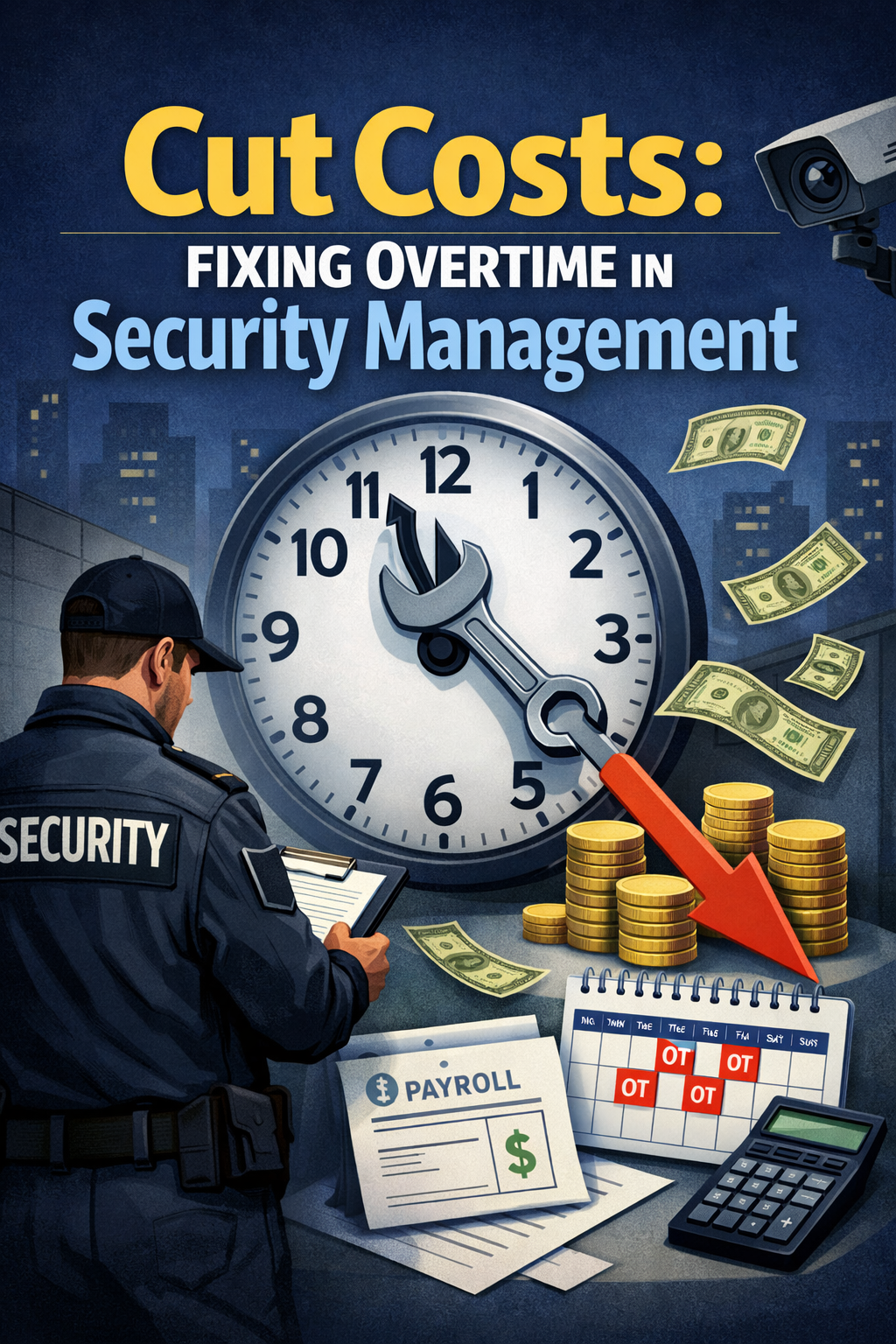
Overtime Is Killing Your Security Margins: A Practical Fix-Plan
Overtime expenses in security operations can silently drain resources and reduce profit margins. As a security professional or business owner, recognizing where unnecessary overtime accrues and implementing strategic fixes is crucial for your company's financial health and operational efficiency. This post provides actionable steps to identify hidden overtime costs and effective strategies to manage them.
Uncovering Hidden Overtime
Overtime costs often lurk in areas like coverage gaps, poor scheduling, and timekeeping errors. These issues not only inflate expenses but also compromise service quality. For example, inadequate scheduling can lead to unplanned double shifts, which not only incurs additional costs but may also lead to compliance issues and reduced guard alertness.
Implementing Scheduling Rules to Prevent Accidental Overtime
Effective scheduling is key to prevent overtime in security operations. Use advanced scheduling software to forecast demand accurately and assign shifts based on actual needs rather than guesstimates. Implement strict scheduling rules that flag potential overtime cases before they turn into costly payouts.
Time Clock Approvals and Rounding Pitfalls
Managing time clock approvals is essential to ensure accurate pay for actual hours worked. Be wary of rounding practices; small discrepancies can add up. Ensure your timekeeping system is precise, and review time sheets weekly to catch any anomalies that might lead to unintentional overtime.
Optimizing Shifts, Relief, and Rotation Policies
Consider re-evaluating your relief coverage and rotation policies to optimize efficiency. Split shifts and strategic shift rotations can help cover long hours without defaulting to overtime. For instance, two guards working in staggered shifts can cover more ground than relying on one guard working extensive hours.
Weekly Overtime Dashboard: Essential Metrics to Monitor
Establish a weekly overtime dashboard that tracks key performance indicators like hours worked, overtime costs, and shift completion rates. This real-time data allows for quick adjustments and helps keep your operation running smoothly and economically.
Conclusion
Overtime doesn't have to be a cost of doing business. With strategic management and the right tools, you can significantly reduce excess overtime and enhance your security operation's efficiency and profitability. Start by implementing these steps today and take control of your budget!
Call to Action: Review your current overtime practices and deploy these strategies to streamline operations and bolster your bottom line.