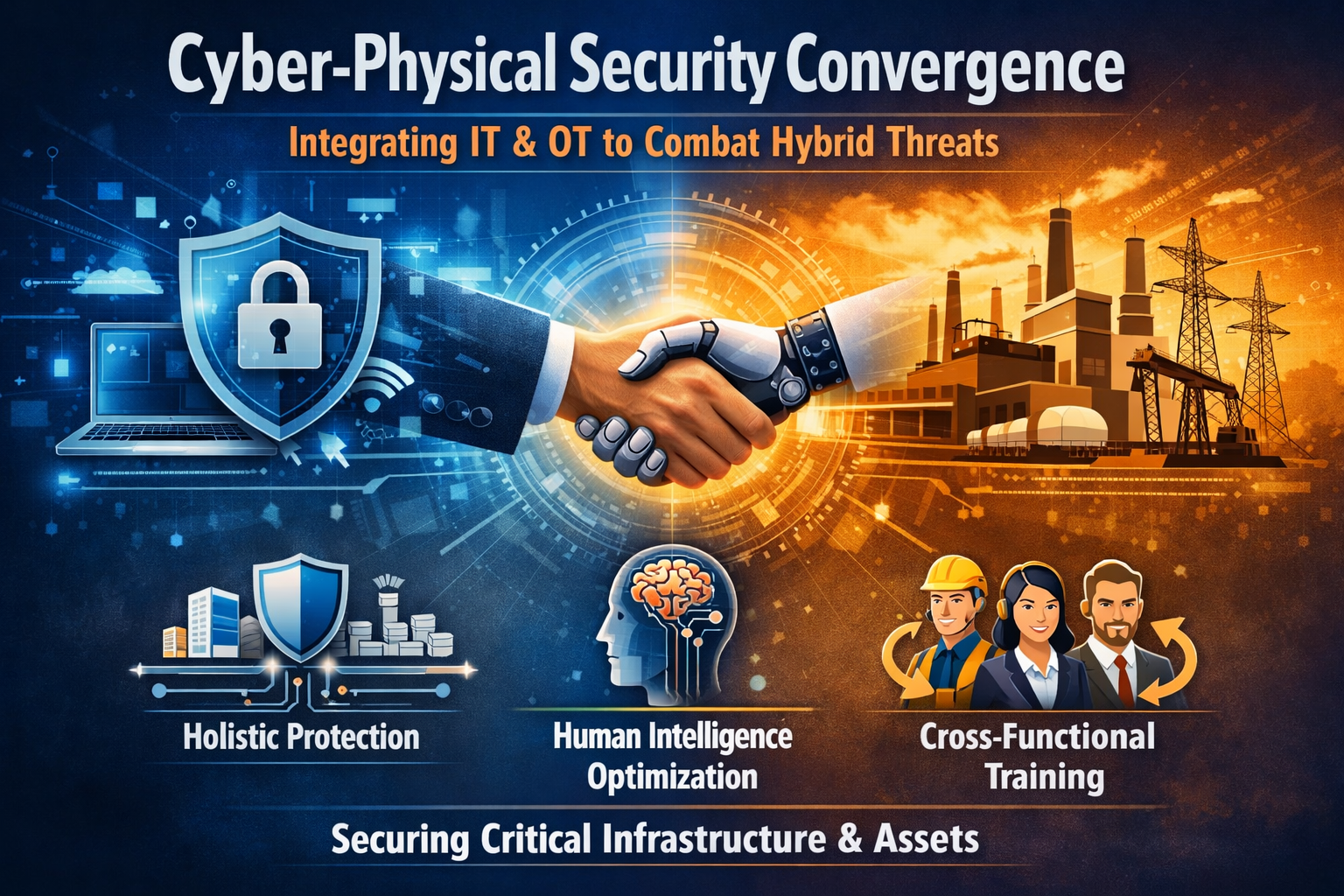
Introduction: The Imperative of Cyber-Physical Security Convergence
In an increasingly interconnected world, the traditional boundaries between digital and physical security are rapidly dissolving. This evolution ushers in the era of cyber-physical security convergence, a critical integration of cybersecurity and physical security systems. As organizations grapple with the escalating complexity of IT (Information Technology) and OT (Operational Technology) environments, they face a proliferation of sophisticated, hybrid threats that target both digital infrastructure and physical assets simultaneously. A unified defense and holistic protection are no longer aspirational but an absolute imperative. This article will delve into the profound benefits, inherent challenges, and 'radical' best practices required to achieve truly unified security operations, fostering a resilient security posture against the multifaceted risks of today.
Understanding the IT/OT Divide and the Drivers for Integration
Historically, Information Technology (IT) and Operational Technology (OT) environments operated in distinct silos. IT focused on data, networks, and business systems, prioritizing confidentiality and integrity. OT, conversely, managed industrial control systems (ICS), SCADA, and other operational processes, with an unwavering focus on availability and safety for physical operations. However, modern threat actors have become adept at exploiting the seams between these domains, targeting both digital vulnerabilities and physical assets, necessitating a unified approach. The integration of IT and OT networks is now essential for modern security, driven by the need to address these complex, hybrid threats. This convergence is crucial for protecting industrial process components interacting with physical elements, such as those found in critical infrastructure protection, manufacturing, and smart buildings. For instance, securing devices within IoT security in smart buildings often blurs the lines between IT and OT, demanding a comprehensive strategy. Organizations must move beyond conventional robust cybersecurity strategies to embrace a broader, converged perspective that encompasses the entire attack surface.
The Tangible Benefits of a Converged Security Posture
Embracing a converged cyber-physical security approach yields significantly enhanced overall protection against multifaceted threats. By integrating data streams from both IT and OT networks, along with physical security systems, organizations achieve improved threat detection and response capabilities. This unified visibility allows security teams to correlate seemingly disparate events—such as a network intrusion coinciding with an unusual access attempt at a physical gate—to identify and mitigate complex hybrid threats far more effectively. A key benefit is optimized resource utilization, particularly human intelligence. Instead of siloed monitoring and reactive responses, security personnel can leverage integrated systems to move beyond basic alerts, engaging in proactive threat hunting. This shift is further amplified by advanced security automation, which streamlines routine tasks and frees up human analysts for more strategic work. Furthermore, a converged strategy often leads to potential cost reductions by consolidating technologies, reducing redundant systems, and increasing operational efficiencies. By integrating systems and processes, organizations can build smarter, safer systems that offer comprehensive protection, enhancing their overall security posture and fostering greater integrated incident management capabilities.
Navigating the Challenges of Cyber-Physical Security Implementation
While the benefits are compelling, achieving true cyber-physical security convergence is not without its hurdles. One of the primary challenges lies in technical integration between disparate IT and OT systems. These environments often employ different protocols, hardware, and software, requiring significant effort to create interoperable solutions. Beyond technology, organizational silos present a formidable barrier. The traditional separation of IT, OT, and physical security teams often results in distinct cultures, communication gaps, and conflicting priorities. Bridging these divides requires significant cultural shifts and a commitment to cross-functional collaboration. Furthermore, while integration offers enhanced protection, it also introduces inherent risks that must be proactively managed. Expanding the network perimeter of OT systems to include IT components can expose previously isolated industrial control systems security to new cyber threats. The complexity of managing unified technology while ensuring operational continuity, especially for critical infrastructure, demands meticulous planning and execution to prevent disruptions.
Best Practices for Achieving Unified Cyber-Physical Security
To successfully navigate the complexities of integration, organizations must adopt a 'radical' strategy for achieving cyber-physical security convergence. This begins with unified monitoring across all IT, OT, and physical security systems. This means centralizing data from various sources, including comprehensive physical security systems like access control integration, video surveillance, and intrusion detection, alongside network and operational technology telemetry. The importance of integrated access control systems cannot be overstated, as they provide a unified view of who (or what) has access to both digital and physical assets, enabling granular control and rapid revocation if a threat is detected. Leveraging technologies such as AI video analytics can further enhance proactive threat detection by identifying anomalous physical behaviors. Adopting streamlined compliance processes and unified risk management frameworks is also critical, ensuring that security measures meet regulatory requirements across both domains and simplify navigating security compliance. Ultimately, advocating for a holistic approach is paramount to creating a truly resilient and responsive security framework, moving beyond piecemeal solutions to achieve comprehensive security resilience.
The Human Element: Optimizing Intelligence in Converged Operations
Even with the most sophisticated integrated systems, the vital role of trained personnel in managing and responding to threats within a converged environment remains paramount. Integrated systems allow security personnel training to leverage their expertise more effectively, moving beyond mere data collection to insightful analysis and strategic action. The shift from reactive monitoring to proactive threat hunting and coordinated response is a hallmark of optimized human intelligence in converged operations. This requires a dedicated focus on cross-functional training, skill development, and strategic coordination among security teams. IT specialists need to understand OT vulnerabilities and physical security protocols, while OT engineers and physical security guards must grasp cybersecurity fundamentals and the implications of network-level threats. Programs focused on elevating security through continuous training and upskilling are essential. By empowering personnel with the knowledge and tools to operate effectively across the converged landscape, organizations can significantly enhance their ability to detect, analyze, and neutralize hybrid threats. This also extends to integrating human-led initiatives, such as comprehensive guard workforce solutions, into the unified security operations center.
Conclusion: Forging a Resilient Future with Unified Security
The journey towards full cyber-physical security convergence is an undeniable trajectory for modern enterprises and critical infrastructure. As cyber and physical realms intertwine more deeply, a holistic, unified approach is not merely an advantage but an essential strategy for navigating the complex and evolving landscape of hybrid threats. We've explored how bridging the IT/OT divide leads to enhanced protection, improved efficiencies, and a stronger security posture. While challenges in technical integration and organizational culture persist, they are surmountable through 'radical' best practices like unified monitoring, integrated access control, and streamlined risk management. Crucially, the indispensable role of human expertise, optimized through cross-functional training and proactive threat hunting, underpins the success of any converged security framework. By embracing these strategies, organizations can move confidently towards a future of robust security resilience. The future of security management with AI and automation will only further solidify the need for this convergence, ensuring comprehensive protection in an increasingly interconnected and vulnerable world.